Scholars Insights: Shaping the Future of Our Graduates
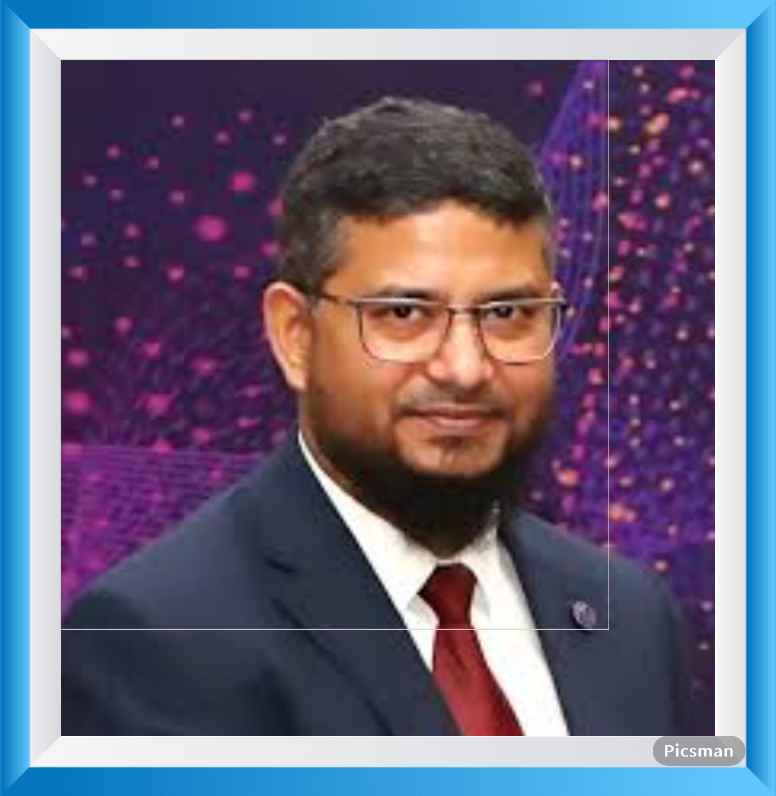
Prof. Mufti Mahmud
Information & Computer Science Department
Graduate Students:

1- Mr. Md Siyamul Islam
Research Topic: Building Trustworthy AI for Early Alzheimer’s Detection. This thesis focuses on making AI-driven Alzheimer’s Disease (AD) prediction more clinically reliable and fair by moving beyond simple accuracy. It proposes a framework to integrate multiple medical data sources while correcting for the "noise" and biases often found in clinical settings.

2- Mr. Mohammad Asifur Rahi
Research Topic: Lung nodule segmentation and malignancy classification using multimodal Contrastive Image Language Pretraining (CLIP). The work will use CLIP-based variants with few-shot, semi-supervised, and weakly supervised settings to segment lung nodules and classify malignancy. The research will be conducted using the LIDC-IDRI dataset, which comprises CT scans and radiologist-annotated textual descriptions of lung nodules.
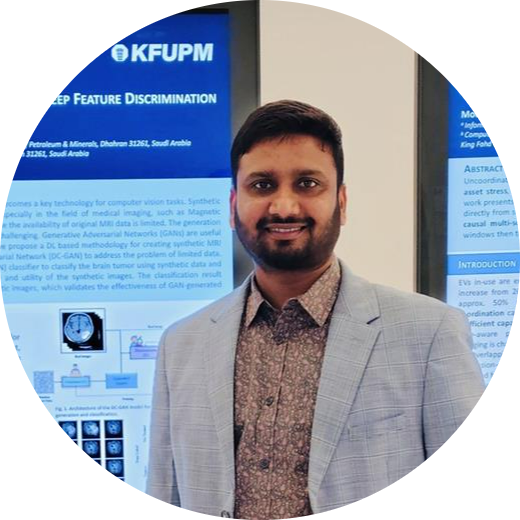
3- Mr. Md Sumon Ali
Research Topic: Towards a Digital Twin for Critical Care through Explainable Digital Human Modeling of ICU Patients. This research develops a real-time ICU Digital Twin using MIMIC-III data to dynamically monitor patient risk and predict clinical deterioration.

4- Ms. Nuren Nafisa
Research Topic: Explainable and Fair Multimodal Brain Informatics for Early Detection and Progression of Neurodegenerative Diseases. This framework focuses on making brain informatics more practical and ethical for real-world hospitals. It moves beyond simple diagnosis to provide a clear, long-term view of how neurocognitive disorders progress in individual patients.
5- Ms. Sabrina Jahan Maisha
Research Topic: AI-Driven Quantification of Neurodegeneration Using Automated Brain Region Segmentation and Longitudinal MRI Analysis. This research focuses on using computer vision and deep learning to detect structural brain changes years before clinical symptoms of neurodegeneration appear. The primary goal is to automate the measurement of brain atrophy over time to establish reliable biomarkers for early diagnosis.
6- Ms. Ghada Abdulsalam
Research Topic: An Explainable Multimodal Vision Language Framework for the Early Diagnosis of Alzheimer’s Disease. This research combines Vision-Language Models (VLMs) and Large Language Models (LLMs) to create a diagnostic system that translates brain scans into clear medical reports. By using the ADNI dataset, it aims to turn complex imaging into understandable insights for both clinicians and families.
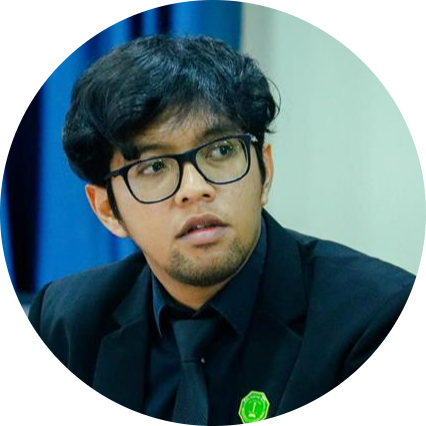
7- Mr. Muhammad Afrizal Amrustian
Research Topic: Computer Vision-Medical Image Analysis. Description: Reconstruction of 3D MRI volumes for Alzheimer's Disease. Description: Reconstruction of 3D MRI volumes for Alzheimer's Disease
8- Mr. Md Shohidul Islam Polash
Research Topic: Smart IoT and Agentic AI-based Monitoring System for Dementia and Alzheimer’s Patients. This IoT-based system creates a safety net for dementia patients by combining sensors and AI to monitor emergencies like falls or wandering. It balances immediate safety with long-term care planning, allowing patients more independence while keeping caregivers informed.
9- Mr. Towhidul Islam
Research Topic: A Novel Geometric Deep Learning Architecture for Alzheimer's Disease Classification Using Anatomically-Informed 2D Point Clouds from Structural MRI. This research optimizes Alzheimer’s diagnosis by converting heavy 3D MRI data into sparse point clouds. By representing the brain as geometric points rather than a solid block of voxels, the system identifies disease markers using far less computing power.
10- Ms. Fizza Hassan
Research Topic: Anatomy-Aware 3D Synthesis of Lung Radiographs for Improved Tumor Detection. This research addresses the "long-tail" problem in medical imaging: the fact that common lung cancer cases are overrepresented in datasets, while rare but high-risk tumor presentations are dangerously scarce. The goal is to synthetically generate anatomically plausible, 3D lung tumors to train more robust diagnostic AI.
Prof. Usman Qamar Mathematics Department
Graduate Students:
1- Mr. Mohamed Elasri
Research Topic: Solving the 1D Viscous Burgers Equation with PINNs under Missing Data Conditions. This research assesses PINNs for solving the 1D viscous Burgers equation with missing data, showing that embedding physical laws enables accurate fluid dynamics modeling even with sparse observations.
Dr. Hamdi Aljamimi
Information & Computer Science Department
Graduate Students:
Research Topic: Ms. Asrar is working on interpretable deep learning, mainly rule extraction and surrogate modeling to make neural networks more understandable.
2- Mr. Aulia FadliResearch Topic: Mr. Aulia is working on interpretable AI, focusing on the role of concepts and information leakage in concept bottleneck models.
3- Ms. Dwi Haryani
Research Topic: Ms. Dwi is working on trustworthy speech emotion recognition for Arabic, with a focus on reliable explanations under dialectal and data variation.
4- Ms. Fatimah Alatifi
Research Topic: Ms. Fatimah is working on Arabic large language models, focusing on the consistency of their cultural alignment across different models and dialects.
Research Topic: Ms. Nahida is working on explainable multimodal AI for Arabic online safety across different dialects and content types.
Dr. Hamzah Luqman
Information & Computer Science Department
Graduate Students:
1- Mr. Ahmed Hasanaath
Research Topic: This research uses spatio-temporal modeling and large language models to improve sign language recognition and translation accuracy. It integrates video and pose data to generate coherent sentences, achieving state-of-the-art performance on benchmarks. A new smartphone dataset further supports practical, real-world communication by capturing diverse signing styles and environments.
2- Ms. Doaa Dalaq
Research Topic: This research develops generalizable vision-language models for diabetic retinopathy with evidence-based reasoning instead of black-box predictions. By detecting specific retinal lesions, the system aligns AI outputs with clinical decision-making. Tested with KKESH across diverse datasets, it ensures consistent diagnosis. Parameter-efficient fine-tuning reduces computational cost for clinical deployment.
3- Ms. Nour Imane Zeghib
Research Topic: Automation of sign language sentences’ segmentation.


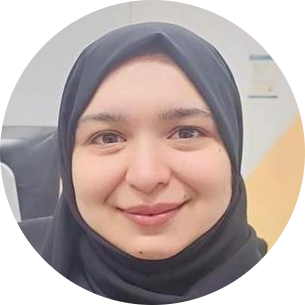


 4- Mr. Ahmed Abdelaal
Research Topic: Deepfake Audio detection and Improving Arabic TTS. Also I am interested in working on Large Models, which focus on Text and Audio with emphasis on adaptation to the Arabic culture.
5- Ms. Aisha Alansari
Research Topic: Investigating hallucination in large language models (LLMs), with a focus on Arabic as a case study. It aims to evaluate, understand, detect, and mitigate hallucinations arising in natural language generation tasks.
Dr. Irfan Ahmad
Information & Computer Science Department
Graduate Students:
1- Ms. Khawlah Dehwah
Research Topic: Ms. Khawlah is working on multi-modal AI mainly related image and other modalities, their efficient representation, processing, and understanding.
2- Ms. Dorieh Alomari
Research Topic: Ms. Dorieh is working on efficient text representations for natural language processing, including language models.

3- Mr. A.B.M. Ashikur Rahman
Research Topic: Mr. Rahman is working on analysis and mitigation of hallucination and sycophancy in LLMs and VLMs.
4- Mr. Mahdi Saleh
Research Topic: Mr. Saleh has yet to start his thesis, but he will work in the area of optimization on topics related to AI.

Dr. Abdul Jabbar Siddiqui
Computer Engineering Department
Graduate Students:
1- Mr. Md Moazzem Hossain
Research Topic: LEMMIA: Large and Effiecient Multi-Modal Intelligence and Analysis. The thesis investigates novel techniques for multi-modal intelligence and analysis focusing on optimizing and efficient-ifying large models for resource-constrained devices, on-device training and inference.
2- Mr. Irfan Rashid

Dr. Ayaz Khan
Computer Engineering Department
Graduate Students:
1- Mr. Hamza Mohammad Ashfaq
Research Topic: Enhancing Distributed Intrusion Detection System. This study compares ZeroMQ and DDS in a distributed IDS, develops a hybrid CNN–LightGBM detection model, addresses scalability and reliability challenges, and validates performance against benchmark IDS approaches.
2- Mr. Abdussamad Idris Ali
Research Topic: Real-Time Distributed Time-Series Analysis Across Multiple Data Streams. This research optimizes real-time time-series analysis by implementing efficient attention mechanisms that maintain accuracy while reducing overhead. It focuses on enhancing TFT model interpretability for financial analysts and deploying a scalable, end-to-end pipeline for live stock market forecasting.
 3- Mr. Muhammad Dikko Gambo
Research Topic: A scalable decentralized framework for automated, privacy-preserving, and timely CTI sharing that supports large-scale DDS-based deployments, enables sharing of TTPs for richer threat intelligence, and incorporates machine learning to fully automate data sanitization.
Dr. Maad Alowaifeer
Electrical Engineering Department Industrial and Systems Engineering Department
Graduate Students:

1- Mr. Mamoun Hennache
Research Topic: Working on neural network verification for efficient and safe operation of critical infrastructure.
2- Mr. Quadri Usman
Research Topic: Working on reinforcement learning for the efficient control of electrical energy systems.

3- Ms. Nouf Almutairy
Research Topic: Working on distributed optimization of mobile microgrids to achieve resilient operation.
Dr. Majed Alzayer
Information & Computer Science Department
Graduate Students:

1- Ms. Kaluad Sanyour
Research Topic: Assessing and Enhancing Accessibility in Software Engineering Environments for Dyslexic Professionals. This study focuses on bridging the productivity gap for dyslexic software professionals. It aims to systematically identify and classify engineering-specific barriers while developing targeted interaction techniques and solution designs to mitigate these challenges.
2- Ms. Leina Abouhagar
Research Topic: Design and evaluation of VR spectatorship experiences for football matches. This research aims to identify and analyze the key factors that contribute to high-quality virtual spectatorship experiences for football matches, and to develop VR-based interaction and visualization techniques that effectively support these experiential elements. Leina is currently working on her PhD proposal.
3- Ms. Nada Alelaiwi
Research Topic: Ms. Nada is currently in the preliminary stages of her proposal development. Her research is expected to focus on the design and implementation of a framework for trustworthy Human-Robot Interaction (HRI).
Dr. Motaz Alfarraj
Electrical Engineering Department
Graduate Students:
1- Ms. Fatimah Alderazi
Research Topic: Multimodality alignment in VLM. The student is focusing
on the representation of visual inputs for VLMs and how to better align them
with other modalities such as text, speech, meta-data, .. etc. The specific
focus is on the ensuring that VLMs can extract richer information from visual input.
2- Ms. Haya Aldawsari
Research Topic: The student is working on Arabic sign language video generation. While the overall work is on sign language generation, we are also interested in exploring visual generative AI in general.
3- Mr. Alaqsa Jamel Akbar (Undergraduate student)
Research Topic: The student is working on sign language generation for Arabic.
 4- Mr. Ahmad Nayfeh
Research Topic: The student is working on medical image analysis. Specifically, he is working on image to image translation (CF-FA) for Retina images.
Dr. Muzammil Behzad
Information & Computer Science Department
Graduate Students:
 1- Ms. Hania Ghouse
Research Topic: Ms. Hania’s research focuses on medical vision-language models for end-to-end clinical image understanding, emphasizing anatomically grounded analysis, reliable report generation, reduced hallucinations, and the development of interpretable, clinically trustworthy systems for real-world deployment.
Dr. Nuha Albadi
Information & Computer Science Department
Graduate Students:

1- Mr. Mena Hany Hanna
Research Topic: Arabic Cultural Alignment for Multimodal Large Language Models. This research tackles cultural bias in MLLMs by addressing their tendency to generate generic outputs for Arab-centric data, introducing an Arabic Cultural Alignment Framework to improve cultural awareness and contextual accuracy.
Dr. Omar Hammad
Information & Computer Science Department
Graduate Students:
1- Ms. Qurrat Ul Ain Naheed
Research Topic: Ms. Naheed's research project focuses on implementing advanced machine learning techniques to create personalized user experiences in consumer-facing applications. Working with Drahim Fintech App, we are analyzing user behavior patterns to deliver customized interfaces and features.
 2- Mr. Mohammad Mufti
Research Topic: Mr. Mufti's project focuses on creating machine learning models to predict and prevent user churn in consumer-facing applications. Working with Sweater Cars app, we are analyzing user engagement patterns to identify early warning sign of churn.
 3- Mr. Athar Parvez
Research Topic: The project combines human annotations with machine learning to create a comprehensive dataset of Arabic mobile app interfaces, supporting research in Arabic UI/UX design and evaluation.

4- Mr. Mohammed Arefin
Research Topic: The project studies whether private user data improves LLM personalization by comparing retrieval-augmented generation (RAG) performance on raw versus anonymized datasets, quantifying the trade-off between personalization quality and privacy protection.
5- Ms. Bashaer Almelaih
Research Topic: First tear, still exploring: AI Agents, LLMs Generative UI
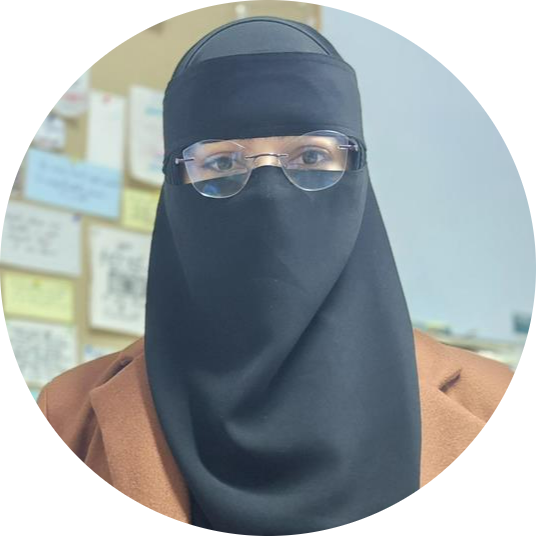
6- Ms. Tania Sulta
Research Topic: Fist year, still exploring: AI Trust
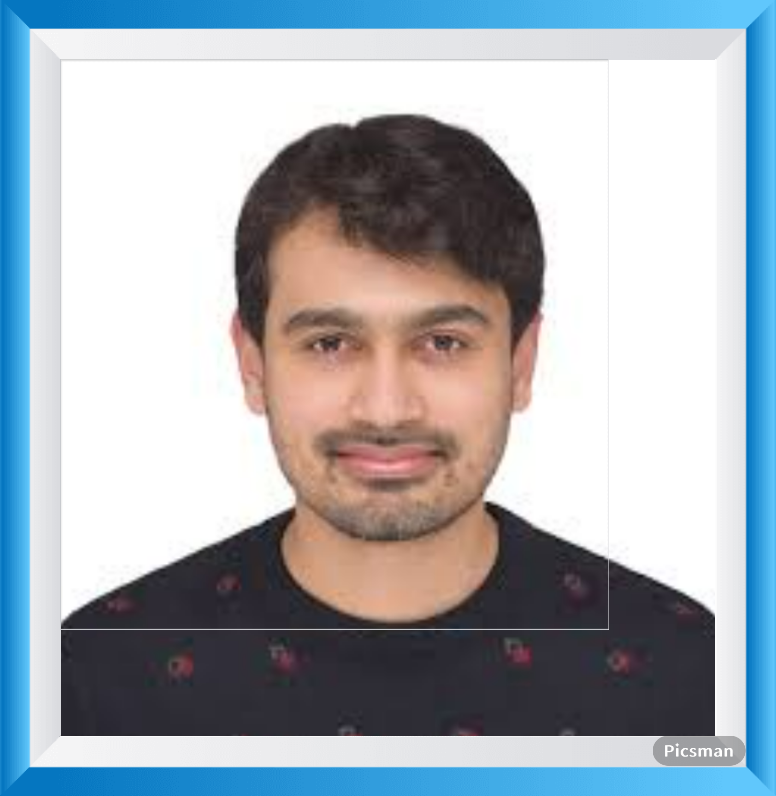
Dr. Shujaat Khan
Computer Engineering Department
Graduate Students:

1- Mr. Saheed Ademola Bell
Research Topic: Privacy preservation in medical imaging
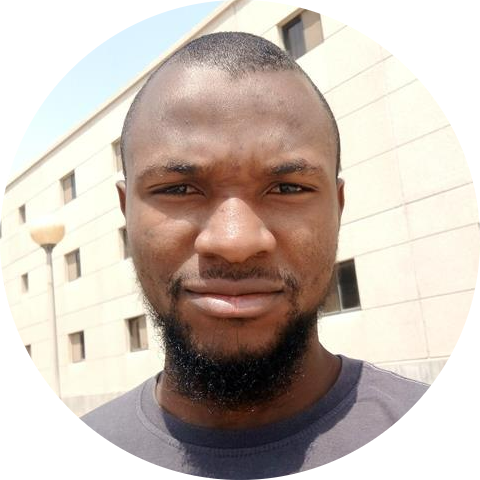
2- Mr. Sulaimon Oyeniyi Adebayo
Research Topic: Diffusion models, generative AI, medical imaging
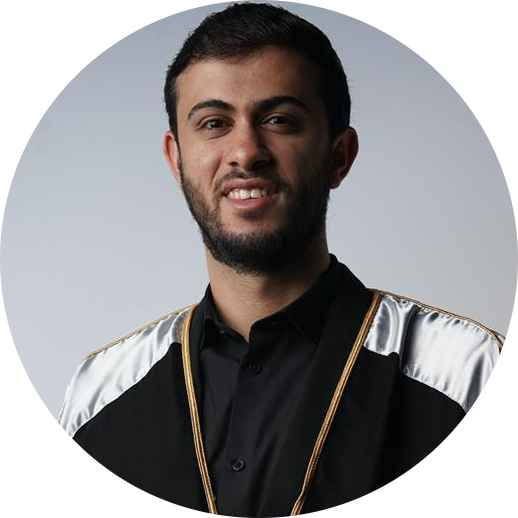
3- Mr. Omar Khater
Research Topic: Generative AI

4- Mr. Aminu Yusuf
Research Topic: Ultrasound Imaging, Imaging Physics, Explainable AI
5- Mr. Tazeen Khan
Research Topic: Face presentation attack detection
Dr. Sadam Al-Azani
SDAIA-KFUPM Joint Research Center for Artificial Intelligence
Information & Computer Science Department
Graduate Students:
1- Mr. Mohammad Uzair
Research Topic: Multi-Omics and Machine Learning Approaches for Brain Cell and Gene Network Mapping in Metabolic Syndrome. This work aims at applying multi-omics and computational strategies to investigate the role of brain cells in MetS. The research focuses on linking genetic risk with brain cell networks, identifying disease-relevant pathways, and evaluating how these may shape systemic metabolic dysfunction.
Dr. Hussein Bin Samma
SDAIA-KFUPM Joint Research Center for Artificial Intelligence
Control & Instrumentation Engineering Department
Graduate Students:

1- Mr. Omar Mohammad Shaqaqi
Research Topic: Cooperative Inspection with LLM-enabled Drones. The main idea is to develop a prototype in which two to three drones cooperatively perform indoor wall inspections under LLM-based control.

2- Mr. Ibrahim Kabir
Research Topic: Attention-Augmented Diffusion Models for Robot Manipulation Tasks. The main idea is to improve the training of diffusion models by incorporating attention. We will add attention layers to capture sequence dependencies and apply the approach in a simulated environment for robot pick-and-place tasks.